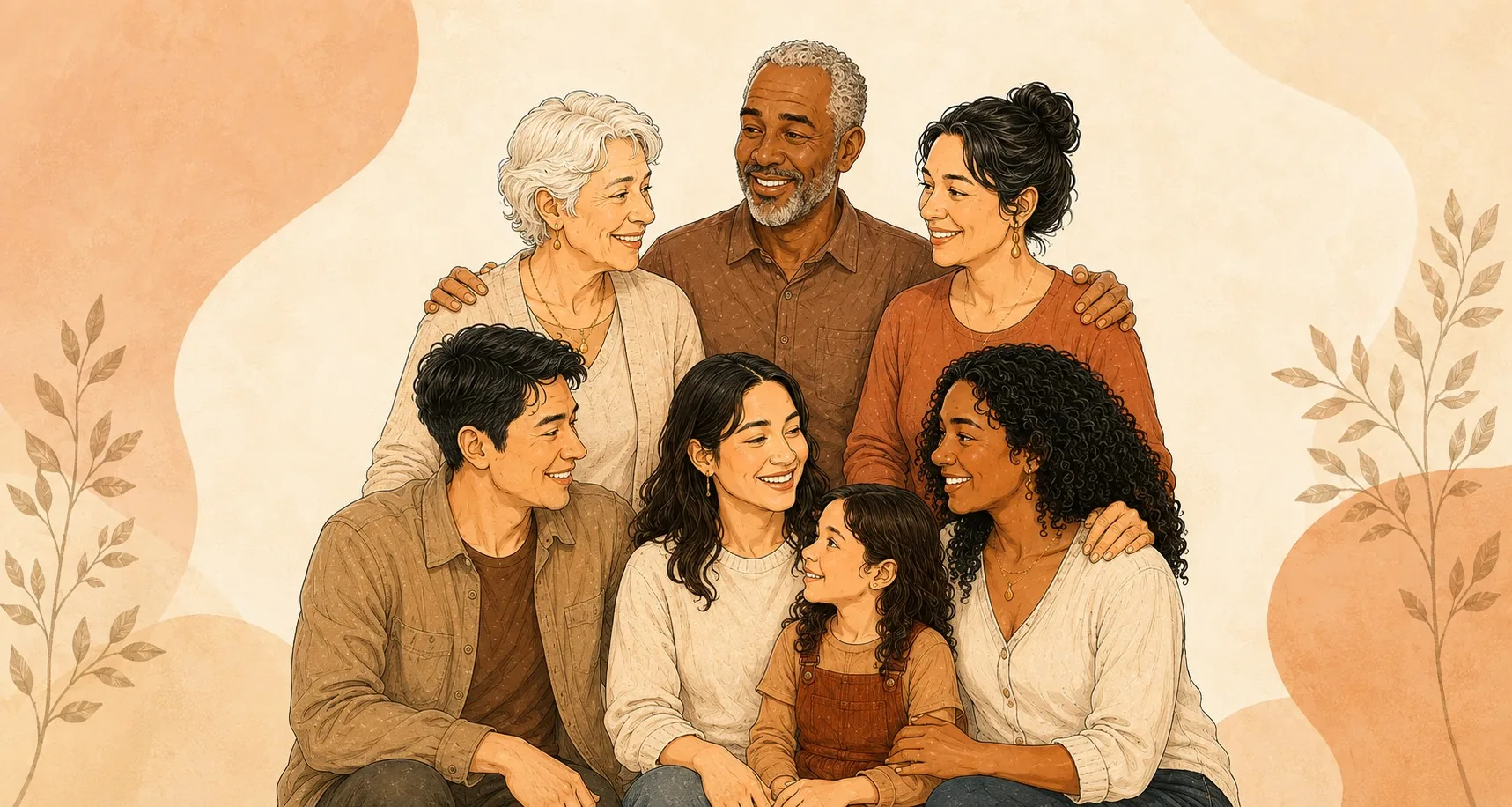
The story doesn't reset at every birthday.
Most therapy practices ask you to pick a lane: attachment science or cultural identity. Child therapy or adult healing. One appointment, one problem, one moment in time.
We don't think that's how families actually work. A mother's unresolved migration grief shapes how she parents. A teenager's racial identity work echoes what her grandmother never got to name. It unfolds.
There wasn't a framework already built for that, one that held migration, race, and family structure together instead of as separate specialties. We wrote our own: Roots vs Routes, published and DOI-registered, not just an idea we talk about.
So we built the practice around the whole arc: pregnancy through elder care, one continuous thread, held by clinicians who understand both the developmental science and the cultural weight your family carries.
Attachment research has never actually supported a single-caregiver, nuclear-family model. It was assumed to. We set out six findings that complicate it, and what Black and Caribbean diasporic caregiving looks like on its own terms.
An Inclusive View of Attachment →