Family Therapy at Anoshe
Family Therapy
The actual room, the actual process, the actual reason families come.
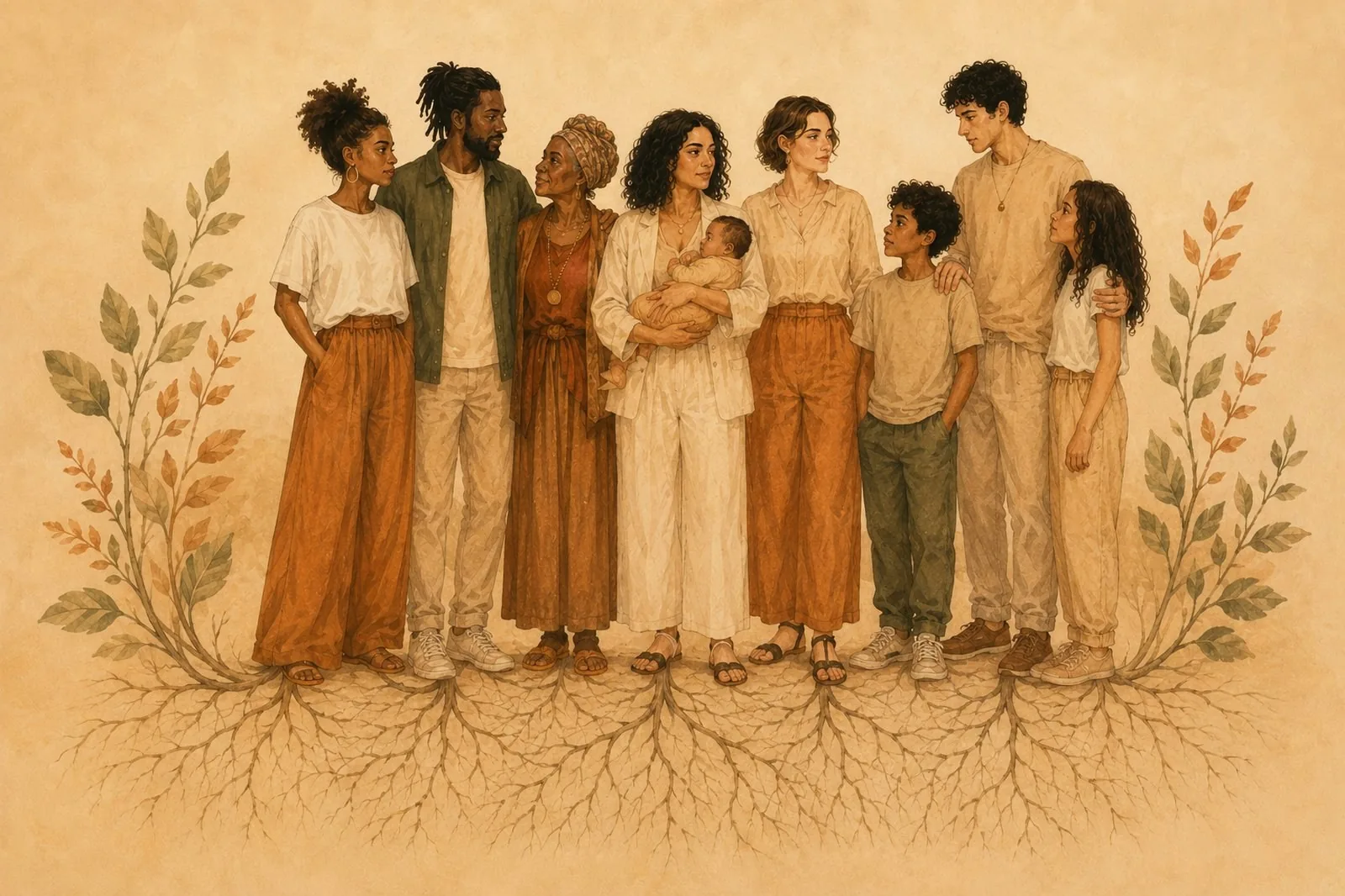
The actual room, the actual process, the actual reason families come.
Every person we sit with is carrying a family. When something is not working we do not only ask what is wrong with them. We ask what family they moved through to get here.
We do not point the way from the front, we walk it with you. Some walks are short. Some take years. Either way we stay for the whole thing, not just the first mile.
Roots is what a family carries forward. Routes is the path that brought the pressure: migration, racism, history nobody chose. A family only makes sense once you can see both.
A family reaches out, together or through one member. There is no expectation that everyone is on board or agrees that help is needed. That is part of what the first conversation is for.
Sessions flex around the family as it actually is: two parents, one, a blended household, grandparents holding a central role, siblings included or not, depending on what the situation calls for.
Less an assessment, more an introduction. Every voice in the room gets heard, not just whoever the booking was made under. Cultural, generational and migration context are part of the story from the start, not asked about later as an afterthought.
Single-session consultation for a specific issue, or ongoing therapy for patterns that need more time. Reportable and court-ordered family therapy sits within this too, held to the same standard of care.
Different expectations across generations about parenting, obligation, or what family even means, without a shared language to talk about it.
Families rebuilding structure and roles after leaving somewhere else behind, often without extended family nearby to help carry it.
Wherever it started, the work is not about one person's behaviour. Every voice in the family shapes what happens from here.
Families navigating child protection, custody or other reportable processes who need therapy that can also stand up as documentation.
Family therapy that reads every household against one cultural default misses what is actually happening in families where migration, race, faith or extended-family obligation shape the roles inside the home. That reading is present from the first conversation, not introduced later as a special consideration.
The family in the room is the actual unit of care, not the person who made the call. Get in touch and we will talk it through with you.
Anoshe Therapies works on Wadawurrung and Dja Dja Wurrung Country, and on the lands of the Wurundjeri Woi Wurrung and Boonwurrung peoples of the Kulin Nation. We deliver online across many other Countries, and we acknowledge the Traditional Owners of each of them.
We pay respect to Elders past and present, and to the Aboriginal and Torres Strait Islander people who continue to hold knowledge about family, kinship and belonging that long predates anything we practise.
Sovereignty was never ceded. This always was, and always will be, Aboriginal land.